
Why this mattered:
Advisors relied on fragmented tools to prepare client recommendations, creating inefficiency and inconsistent insights.
In 2018, I joined the RBC GAM Innovation Lab, an internal startup tasked with modernizing how financial advisors analyzed portfolios and served clients. While engineering capability was strong, the lab had limited design maturity and no unified experience strategy. This created both a challenge and an opportunity: improve advisor workflows while establishing design as a credible, value-driving discipline inside a highly regulated financial institution.
Scope:
Product design ownership across multiple advisor tools, evolving into experience and team leadership.
I joined initially as a contract product designer and went on to support the full product lifecycle of multiple advisor tools over several years. As the lab scaled, my role expanded from hands-on design into experience leadership—shaping how design partnered with product, engineering, and management.
Over time, I became a design lead across the AdvisorHub suite, helping define experience direction, mentor designers, and introduce shared patterns and practices that improved consistency and delivery.
Insight:
The core issue was not just tool usability, but fragmented workflows and lack of a unified advisor experience.
Advisors were forced to move across multiple disconnected tools to complete basic portfolio analysis and recommendation tasks.
This fragmentation increased preparation time and reduced confidence in insights delivered to clients.
Rather than treating each tool as an isolated problem, I helped reframe the work around advisor workflows, focusing on reducing friction, improving comparability, and ensuring insights were consistent and credible across the suite.
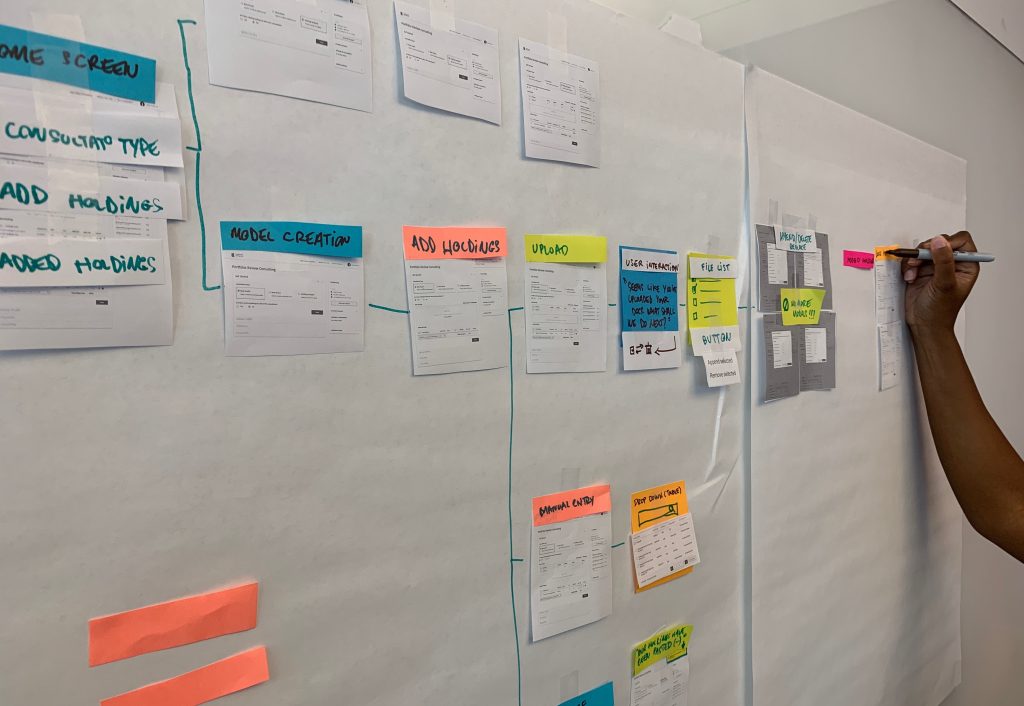
Improve advisor efficiency while laying foundations for a scalable design practice.
From a product perspective, I focused on:
From a practice perspective, I worked to:
This dual focus allowed immediate product impact while gradually increasing trust in design as a strategic contributor.
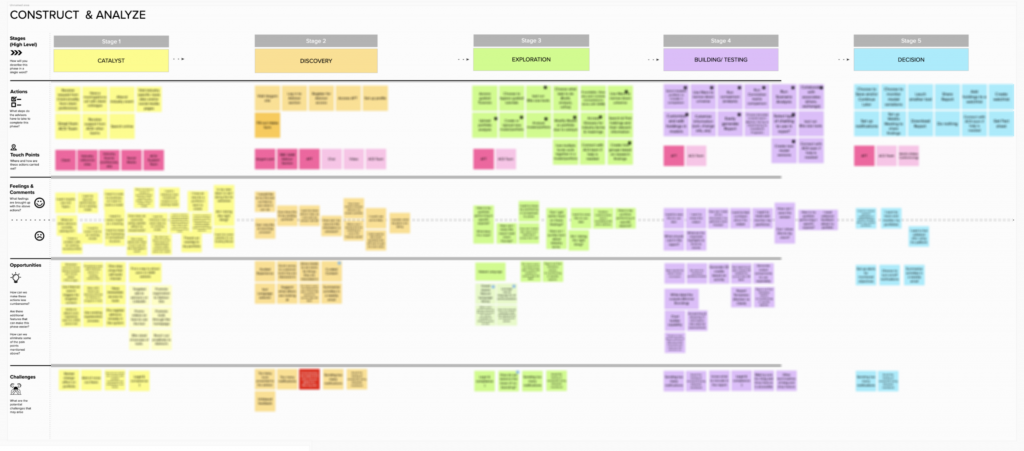
Result: Advisor tools that reduced effort, improved clarity, and drove adoption.
Fund Compare Tool (2018)
Enable advisors to compare multiple funds side-by-side with meaningful insights.
Within three months of launch, the tool saw a 135% increase in usage, validating the demand for clearer comparison workflows and reinforcing the value of design-led simplification.
Model Portfolio Review (2019)
Help advisors analyze and review client portfolios more efficiently.
The tool is now adopted by 600+ advisors and has reduced portfolio analysis time from days to hours, depending on complexity. This materially improved advisor productivity and the quality of preparation.
Design shifted from executional support to an embedded partner within the lab.
As the lab matured, I contributed to:
I also partnered with leadership to help articulate the lab’s vision, mission, and values—strengthening internal alignment and positioning the lab’s work more clearly within the broader RBC GAM organization.
Experience patterns, processes, and trust that enabled future growth.
The tools, workflows, and practices introduced during this period became building blocks for subsequent advisor-facing initiatives. More importantly, the work helped establish design as a trusted voice in shaping digital strategy within the lab.
Design impact grows when product outcomes and practice maturity evolve together.
This chapter of my career reinforced that strong product outcomes and strong teams are inseparable. By focusing not only on what we shipped, but how we worked and collaborated, design became a catalyst for both advisor efficiency and organizational change.
Design impact grows when product outcomes and practice maturity evolve together.
This chapter of my career reinforced that strong product outcomes and strong teams are inseparable. By focusing not only on what we shipped, but how we worked and collaborated, design became a catalyst for both advisor efficiency and organizational change.